How Many Ad Variations Should You Actually Test on Meta in 2026?
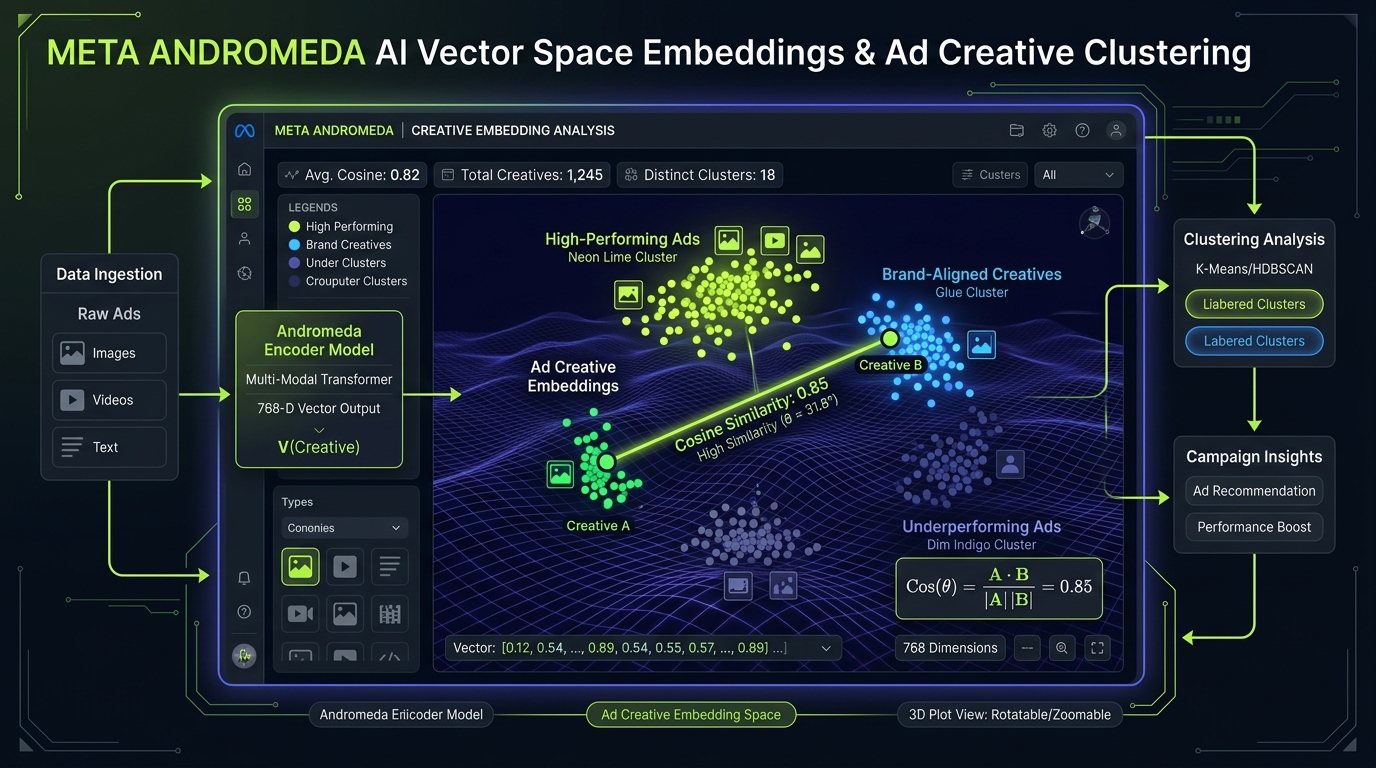
For years, the standard advice for Meta ad testing was simple: make more variations. Change the headline, swap the CTA color, try a different thumbnail, upload twenty versions, and let the algorithm find the winner. That advice is now actively working against you.
What Actually Changed
In December 2024, Meta's own engineering team published details on Andromeda, the retrieval system now used to decide which ads even get considered for an auction. According to Meta's engineering blog, Andromeda is designed to narrow tens of millions of candidate ads down to a much smaller shortlist for each person, each time they open Facebook or Instagram — reportedly in a few hundred milliseconds, using a hierarchical, tree-structured index rather than the older, simpler retrieval logic.
Meta describes this as primarily a relevance and speed upgrade for matching ads to people. But a widely reported side effect — discussed across the media-buying industry, not something Meta has published exact mechanics for — is that creatives which look, sound, or read as very similar tend to get treated as one underlying option during that narrowing step, rather than as independent tests. We cover the mechanics of that grouping behavior in more depth in our guide to why ad variations get zero impressions — this article is specifically about what to do about it at the testing-strategy level.
Why "More Variations" Stopped Working
The old volume approach assumed each upload was an independent shot at the algorithm. If creative testing now collapses near-duplicates into a single delivery pool, then twenty variations that only differ by a headline word or a button color aren't twenty tests — they're one test with nineteen wasted uploads. Ad accounts that keep testing this way tend to see one "hero" ad absorb almost all the spend while the rest sit at zero or near-zero impressions, then wonder why performance plateaus even as testing volume goes up.
The fix isn't to test less. It's to test differently — fewer total uploads, but each one meaningfully different from the others.
A Framework for Meaningful Difference
Instead of asking "how many variations should I make," a more useful question is "how many genuinely different concepts am I actually testing." A concept is only different if it changes along at least one of these dimensions in a way a viewer would actually notice in the first two seconds:
- Format: UGC talking-head vs. studio product shot vs. text-on-screen vs. screen-recording style — different visual language entirely, not the same shot re-cut.
- Hook / angle: The opening claim or problem being addressed — e.g. a price objection vs. a skepticism objection vs. a "how does this even work" curiosity hook. Changing three words in the same sentence doesn't count.
- Environment / setting: Where and how the product is shown — kitchen counter vs. bathroom mirror vs. outdoor lifestyle vs. plain studio background.
- Core value proposition: Which benefit is doing the selling — speed, price, status, health, convenience. A genuinely different angle usually leads with a different one of these.
A new creative is worth a separate upload if it moves on at least one of these axes. A new creative that only tweaks copy inside the same format, hook, setting, and value prop is a micro-variant, and under the current system it's likely to just get folded into whatever's already running.
What This Looks Like in Practice
Say you're testing a skincare serum. The old approach: one UGC video, cut into 15 versions with different captions and thumbnail frames. The diversity-first approach: one UGC testimonial (format: talking-head, angle: skepticism, setting: bathroom, value prop: results), one before/after demo (format: screen-recording, angle: curiosity, setting: studio, value prop: speed), and one lifestyle piece (format: b-roll + voiceover, angle: price objection, setting: outdoor, value prop: value-for-money). That's three uploads instead of fifteen — and each one is actually answering a different question about what resonates.
Common Mistakes When Applying This
- Confusing "different edit" with "different concept." A re-trimmed version of the same footage with a new caption is not a new test.
- Changing too many dimensions at once with too few concepts. If every upload differs on all four axes simultaneously, you can't tell which dimension actually drove the result.
- Killing tests too early. Genuinely distinct concepts still need enough delivery to read a signal — pulling a concept after a few hours of spend tells you almost nothing.
- Treating this as a one-time setup. The dimensions that matter (format, hook, setting, value prop) should get re-tested periodically as audience fatigue and platform trends shift.
Where SellTheClick AI Fits
SellTheClick AI checks how visually and thematically close a new creative is to what you're already running, before you spend budget finding out the hard way. The goal isn't to guess whether Meta will treat two ads as similar — it's to see the overlap up front and decide whether a new upload is different enough to be worth a separate test.